Research
Transportation Infrastructure & Disability
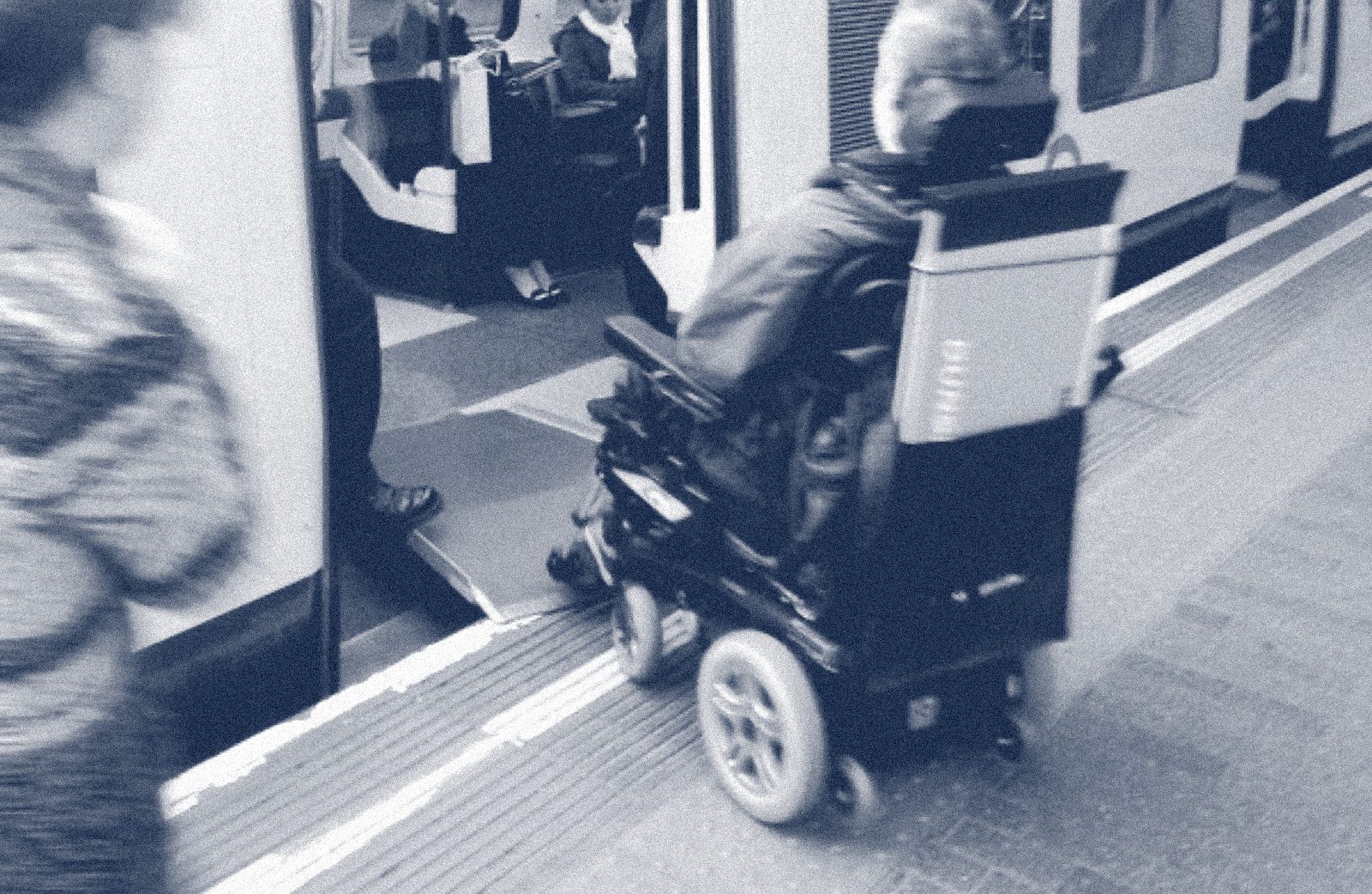
My first major research project examined how wheelchair users navigate — and are excluded by — London’s public transport network. Working within a situational analysis framework and guided by emancipatory research practices, I combined semi-structured interviews, participant observation, and archival research with wheelchair users, transit staff, and disability advocacy groups.
The project set out to trouble a common claim in infrastructure studies: that infrastructures become invisible once they function, and visible only when they break down. That premise didn’t match what disabled riders described about a system that enables nearly four billion journeys a year — riders held a constant “mental travel map” of safe routes just to move through it. I argue that the invisibility thesis is itself a partial, ableist perspective, and offer a crip feminist lens attentive to the unequal ways infrastructures are actually experienced.
The research also traces how disabled passengers reshape the networks they navigate: carrying portable ramps to make otherwise inaccessible stations usable, building and circulating informal knowledge networks, and organizing collectively to win political commitments to accessible stations.
Book: Hacking the Underground: Disability, Infrastructure, and London’s Public Transport System (University of Washington Press, 2023, Feminist Technosciences series)
Selected publications from this project are on the Publications page, including pieces in the International Journal of Transportation Science and Technology, Disability Studies Quarterly, and Revista Tecnologia e Sociedade.